
Petit Lenormand Spread
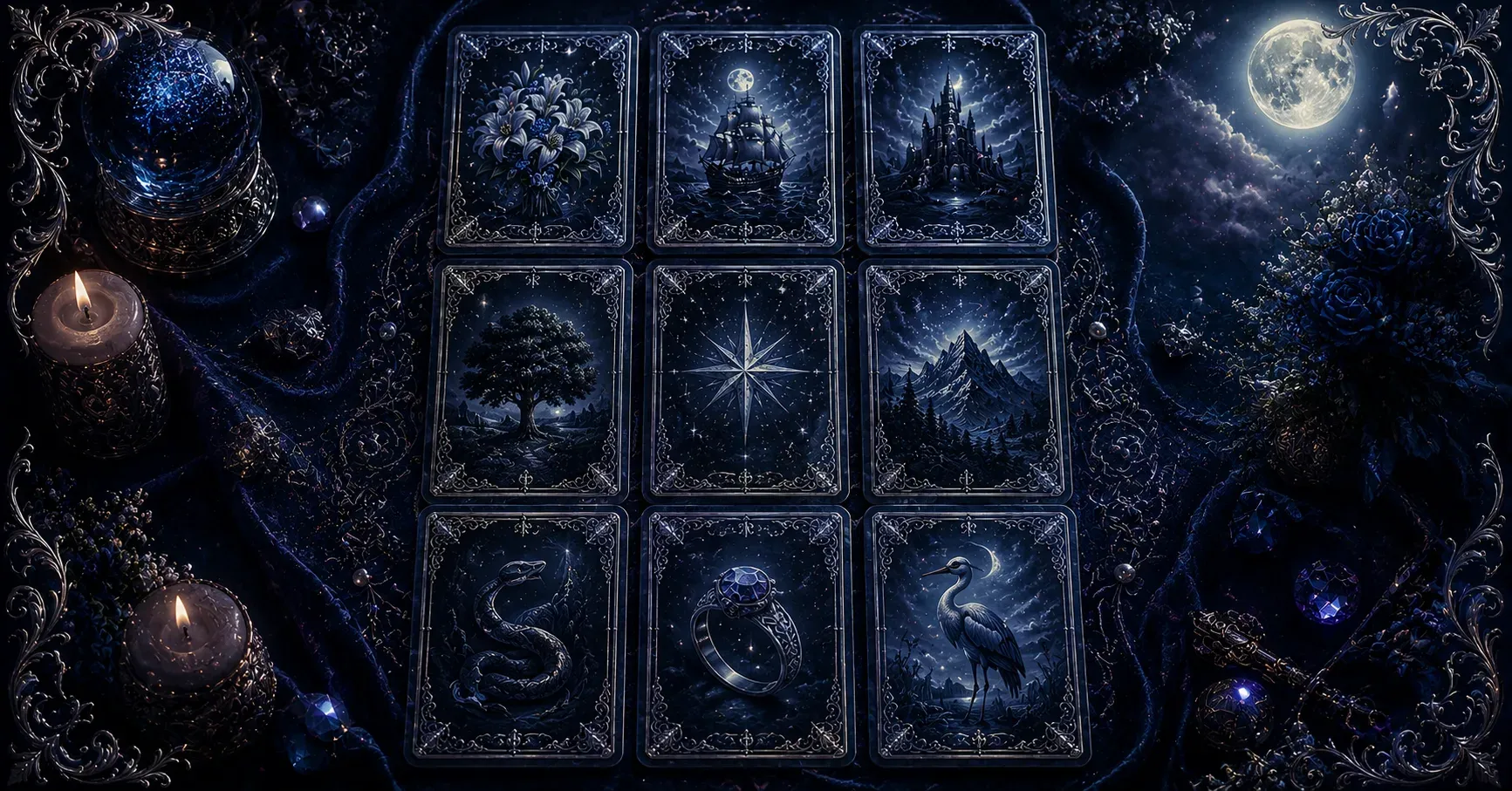
Nine cards in a 3x3 grid for one focused question - the middle card is the heart of your answer. Embeddable domain-locked widget, mobile-responsive.
Add this widget to your site
Free forever. Copy the snippet and paste it into any page — no coding required.
The Lenormand is not tarot. Where tarot speaks in archetypes and psychological landscapes, Lenormand speaks in everyday objects: a letter, a ship, a key, a coffin. The Minor spread takes nine of the most concrete cards and lays them in a tight three-by-three grid, with the central card as the anchor and the surrounding eight shaping its meaning by proximity. It reads fast. It reads bluntly. You get an answer about a specific situation - not a life philosophy.
How it works
Focus on one concrete question - a situation you're currently in, not an abstract hope. The spread deals nine cards from the 36-card Lenormand deck into a three-by-three grid. The center card names the core theme; the cards in direct contact modify it; the corners add peripheral context. Each card is interpreted in relation to its neighbors, not in isolation.
Understanding your result
Lenormand cards mean what they say - the Ship is movement, travel, longing; the Book is secrets, knowledge, what's hidden; the Fox is cunning, strategy, sometimes deception; the Sun is success, clarity, warmth. The nine-card field creates chains of meaning between adjacent cards. A Ship next to a Letter means news from afar; a Fox next to the Key means a solution that involves careful maneuvering. The reading is directional and specific rather than expansive.
Frequently asked questions
How is Lenormand different from tarot?
Lenormand has 36 cards (tarot has 78), no Major Arcana, and no elemental structure. The cards depict concrete objects and situations rather than archetypal figures. Lenormand reads in chains and combinations; tarot reads in individual card meanings. They're different tools, not interchangeable.
What makes the Minor spread different from a larger Lenormand layout?
The full Grand Tableau uses all 36 cards and gives a sweeping life-view. The Minor spread uses nine cards and targets one question. It's built for speed and specificity, not overview.
Do I need to know Lenormand before using this?
No - each card in the reading is interpreted for you. But learning the 36 symbols over time deepens how you read the combinations.
Is this a prediction or a reflection?
Lenormand leans more toward situational description than tarot does - it tends to describe what is and where things are heading. We offer it as a reflective and entertainment tool, not a guaranteed forecast.